November 12, 2026
New study finds about 4 in 10 requests for children’s biologic medications were denied
PHOENIX (Nov. 12, 2026) – When a child’s severe asthma, eczema, hives, or food allergy isn’t under control, an allergist may prescribe a newer type of medicine called a biologic. But a new study being presented at the American College of Allergy, Asthma and Immunology (ACAAI) 2026 Annual Scientific Meeting finds that getting insurance to pay for these medicines can take weeks, and many requests are turned down.
Biologics are medicines, usually given as shots, that target the part of the immune system that causes allergic disease. They can help children whose symptoms don’t get better with other treatments. Before insurance will pay for a biologic, a doctor’s office usually must get prior authorization – requesting permission from the insurance company to order the medication.
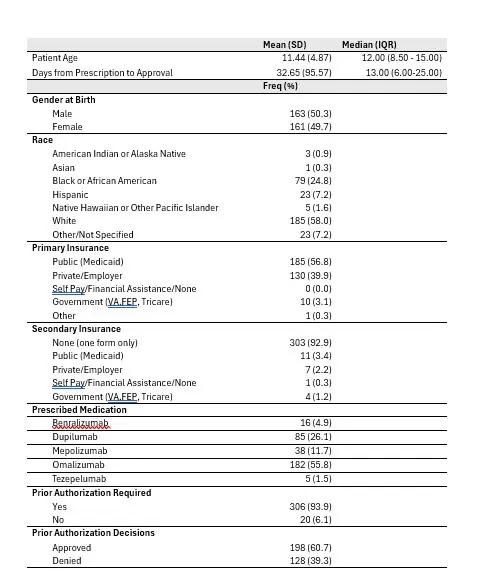
Researchers at a children’s hospital looked at 326 prescriptions for biologic medicines written by allergists from 2018 to 2026. The children were about 11 years old on average.
The study found:
- Almost every prescription needed permission from insurance. More than 9 out of 10 required prior authorization.
- About 4 in 10 requests were denied.
- Denials happened for two main reasons. The insurance company said the child did not meet its rules, or it wanted the child to try a different medicine first. Each reason accounted for about 1 in 4 denials.
- Approval took time. On average, it took more than a month to go from the doctor writing the prescription to insurance approving it. Some families waited much longer.
“When a child’s asthma or allergies are out of control, every week counts,” said allergist Aarti Pandya, MD, co-author of the study and ACAAI member. “The doctor and the family have already decided this medication is the right choice. Then they wait, sometimes for more than a month, and many times the answer is still no. Delays like these can put children at risk of serious health problems.”
The researchers say the findings show the need for changes to the prior authorization process, so children can get the medicines their doctors prescribe without long waits.
“We hope this data helps start a conversation about making the approval process faster and simpler,” said Dr. Pandya. “Children shouldn’t have to wait weeks for care their allergist knows they need immediately.”
Abstract Title: Biologic Medication Denials in Pediatric Atopic Conditions
Presenter: Aarti Pandya, MD
If your child’s asthma or allergies are not well controlled, talk with a board-certified allergist about treatment options. To find an allergist near you, visit AllergyandAsthmaRelief.org. The ACAAI Annual Scientific Meeting is Nov. 12-16. For more news and research from the ACAAI Scientific Meeting, go to our newsroom and follow the conversation on X/Twitter #ACAAI26.
About ACAAI
The American College of Allergy, Asthma & Immunology (ACAAI) is a professional medical organization of more than 6,500 allergists-immunologists and allied health professionals, headquartered in Arlington Heights, Ill. Founded in 1942, the College fosters a culture of collaboration and congeniality in which its members work together and with others toward the common goals of patient care, education, advocacy, and research. ACAAI allergists are board-certified physicians trained to diagnose allergies and asthma, administer immunotherapy, and provide patients with the best treatment outcomes. For more information and to find relief, visit AllergyandAsthmaRelief.org. Join us on Facebook, Instagram, Threads and X/Twitter.
BIOLOGIC MEDICATION DENIALS IN PEDIATRIC ATOPIC CONDITIONS
R301
M. Holland*, M. Jacobson, C. Reinert, E. Cramer, A. Pandya, Kansas City, MO.
Introduction: Medication denials by insurance companies represent a growing barrier to timely and effective care for patients with atopic and immunologic conditions. Optimal treatment for uncontrolled atopic conditions such as asthma, atopic dermatitis, chronic urticaria, and IgE-mediated food allergy can require biologic therapy which often require prior authorization (PA) by payors. This study was performed to evaluate the landscape PA denials of biologic therapies by payors.
Methods: We conducted a retrospective chart review from a tertiary care pediatric care center of patients who had been prescribed biologic medications for atopic conditions by allergists. Medications included were omalizumab, mepolizumab, benralizumab, dupilumab and Tezepelumab that were prescribed between 2018 to 2026.
Results: A total of 326 prescriptions for biologic therapy were identified. The median age of the patients was 11.4 years old and male patients were 50.3% and female patients were 49.7%. A total of 93.6% of prescriptions required a PA. Among the biologics prescribed, more than half were for omalizumab (182; 55.8%) and the second most frequently prescribed was dupilumab (85; 26%). Of those requiring a PA, 39.3% of prescriptions were denied. The most common reasons for denial included not meeting insurance criteria (24.4%), a trial of a pre-requisite (23.4%). The mean days from prescription of medication to approval was 32.65 days.
Conclusion: This study showed a significant time delay from prescription of biologic therapy to final approval of medication. Delays in therapy can put patients at risk for serious health outcomes. This study suggests the need for policy change for the PA process for medications.
Patients with Pediatric Atopic Diagnoses Prescribed Biologic Therapies (n=326)